Summary
As Australia leads the world in residential solar penetration, DNSPs face increasing volatility at the low-voltage (LV) network level. While smart meters provide boundary data, they lack the granularity and real-time visibility required to manage Minimum System Load (MSL), reverse power flows, and phase imbalance effectively.
The network operators transition to a DSO requires bridging a critical visibility gap between the Advanced Metering Infrastructure (AMI) at the connection point and the rapidly evolving Distributed Energy Resources (DER) behind the meter (BTM).
Core Value Propositions for Network Operators
1. High-Definition Grid Observability (Beyond AMI)
- Sub-Minute Telemetry: Powersensor provides 30-second interval data, compared to the standard 30-minute AMI data. This allows network engineers to see transient spikes and rapid fluctuations caused by solar inverter cycling or EV charging.
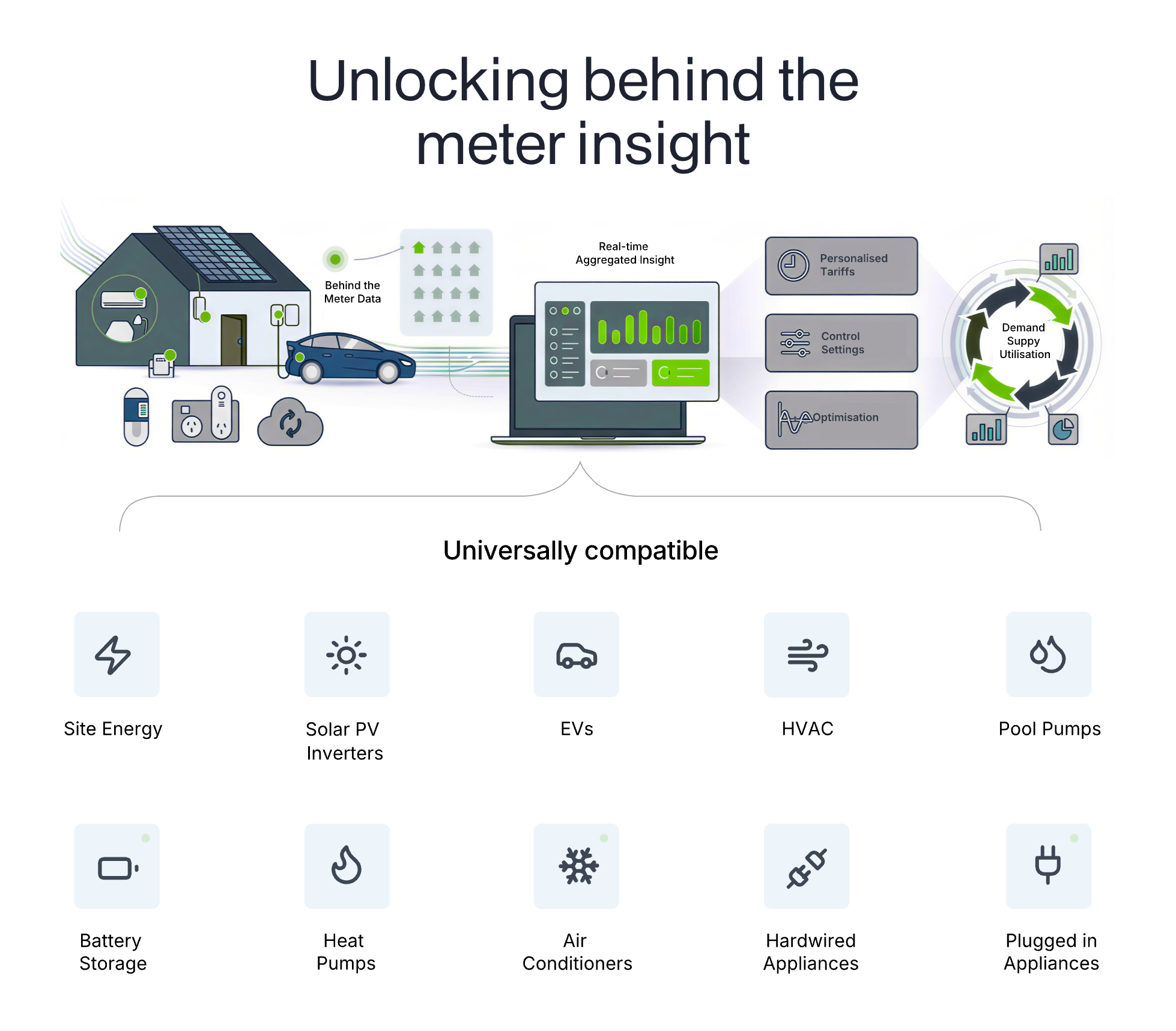
- Behind-the-Meter (BTM) Transparency: Differentiate between gross generation and household load. This granularity is essential for accurate LV State Estimation and identifying the true hosting capacity of a feeder.
2. Managing Minimum System Load (MSL) & Dynamic Exports
- Real-Time Solar Visibility: Monitor real-time solar performance across the fleet regardless of inverter brand. This data supports the transition to Dynamic Operating Envelopes (DOEs), ensuring exports are curtailed only when necessary and maximized when the grid allows.
- Phase Balancing: Identify phase-specific stress in residential streets. With 3-phase monitoring capabilities, Powersensor helps DNSPs pinpoint where solar exports are causing localized over-voltage issues.
3. Cost-Effective Network Asset Management
- Virtual "Truck Rolls": Powersensor is 100% DIY and electrician-free. DNSPs can deploy thousands of sensors to a targeted "constrained" postcode via post, avoiding the high CAPEX and logistical delays of field-crew hardware installations.
- Peak Demand Mitigation: Identify "heavy hitter" appliances (HVAC, pumps, EVs) contributing to localized transformer overload. Use this data to design highly targeted Demand Side Participation (DSP) programs.
4. Accelerating the DSO Transition
- VPP & DERMS Integration: Powersensor acts as a low-cost "Grid-Edge Sensor." Its API feeds real-time data into Distributed Energy Resources Management Systems (DERMS), enabling more sophisticated orchestration of residential batteries and EVs.
- Power Quality Monitoring: Detect voltage fluctuations and "sag/swell" events at the household level before they result in equipment failure or customer complaints.
Strategic Data Capabilities

The Bottom Line
For an Australian DNSP, Powersensor is not just a consumer tool; it is a scalable, low-cost, high-speed grid-edge sensor. By integrating this data, DNSPs can move from reactive asset management to proactive, data-driven orchestration, ensuring a more resilient and solar-ready network for their region and beyond.