How the Powersensor platform works

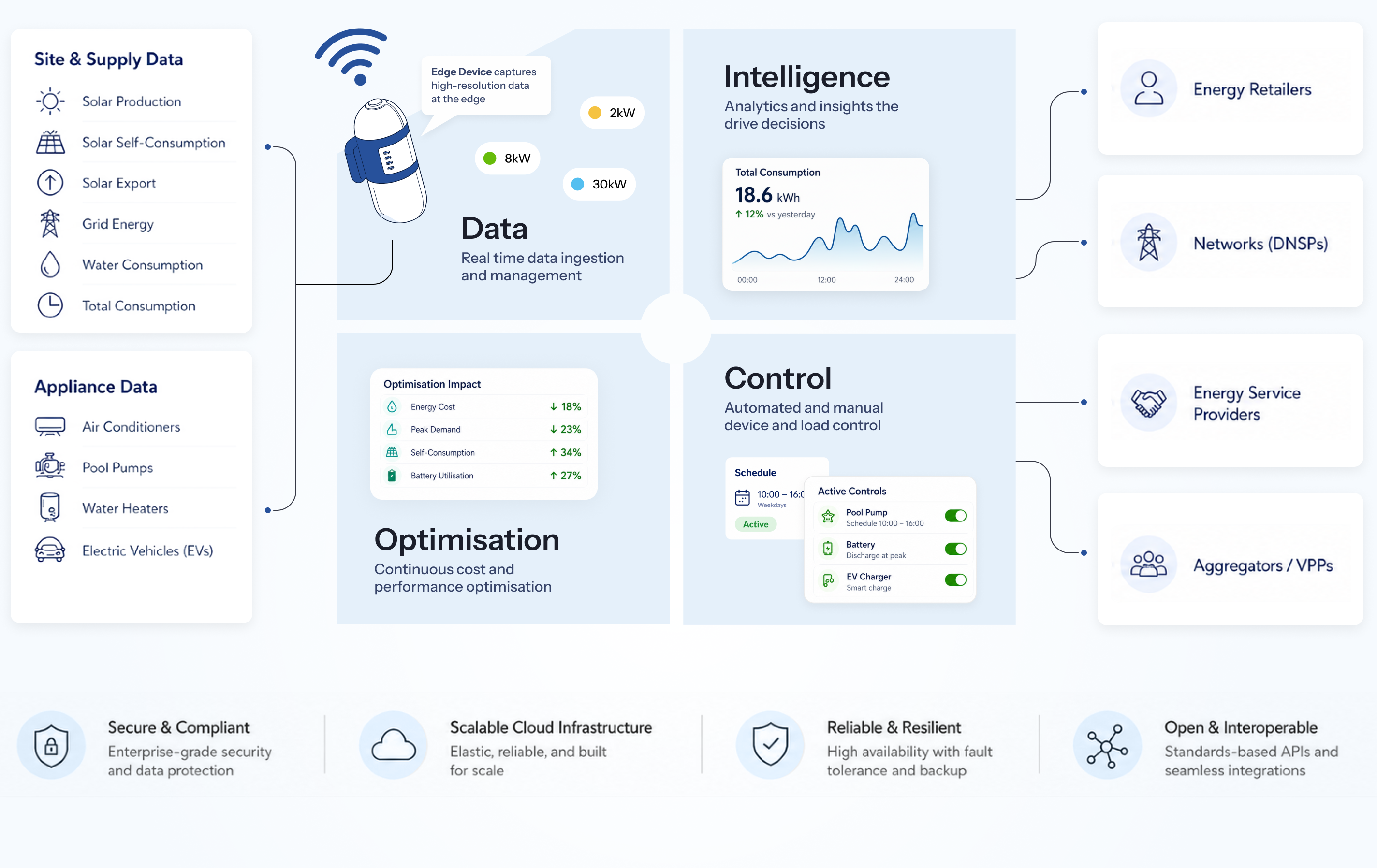
Powersensor is an end-to-end energy platform that captures data at the edge and transforms it into real-time insight and automated control in the cloud.

By capturing high-resolution data directly from homes, circuits, appliances, and distributed energy resources, Powersensor gives energy companies and partners access to the granular, behind-the-meter data they need to better understand, manage, and optimise energy across their networks. This also enables more personalised tariffs, targeted recommendations, and better outcomes for end customers.
At the site level, the Powersensor device collects this data using its patented non-intrusive technology, removing the need for complex installation by an electrician or any access to live wiring. This makes it possible to deploy at scale, without the cost and disruption of traditional solutions.

For homeowners, this same system provides a simple way to gain visibility and control over energy use, with no technical setup required.

Key outcomes for energy retailers and partners

Powersensor brings together data, intelligence, control, and optimisation into a single, connected platform. Each layer works together to turn raw energy data into meaningful insights and automated actions, enabling better decision-making and improved energy outcomes across the network.

How it works

Powersensor platform combines data capture, cloud intelligence, and automated control into a unified system.

Data

The Powersensor device captures real-time energy data directly at the edge, providing visibility into circuits, appliances, and distributed energy resources. Using non-intrusive sensing technology, the platform collects high-resolution data without the need to connect to live wiring, making it simple and safe to deploy across homes at scale. For energy retailers and partners, this enables access to granular, household-level data via a secure, scalable API, supporting deeper insights, integration, and more advanced energy services. For homeowners, it provides a clear view of how energy is being used across the home.

Intelligence

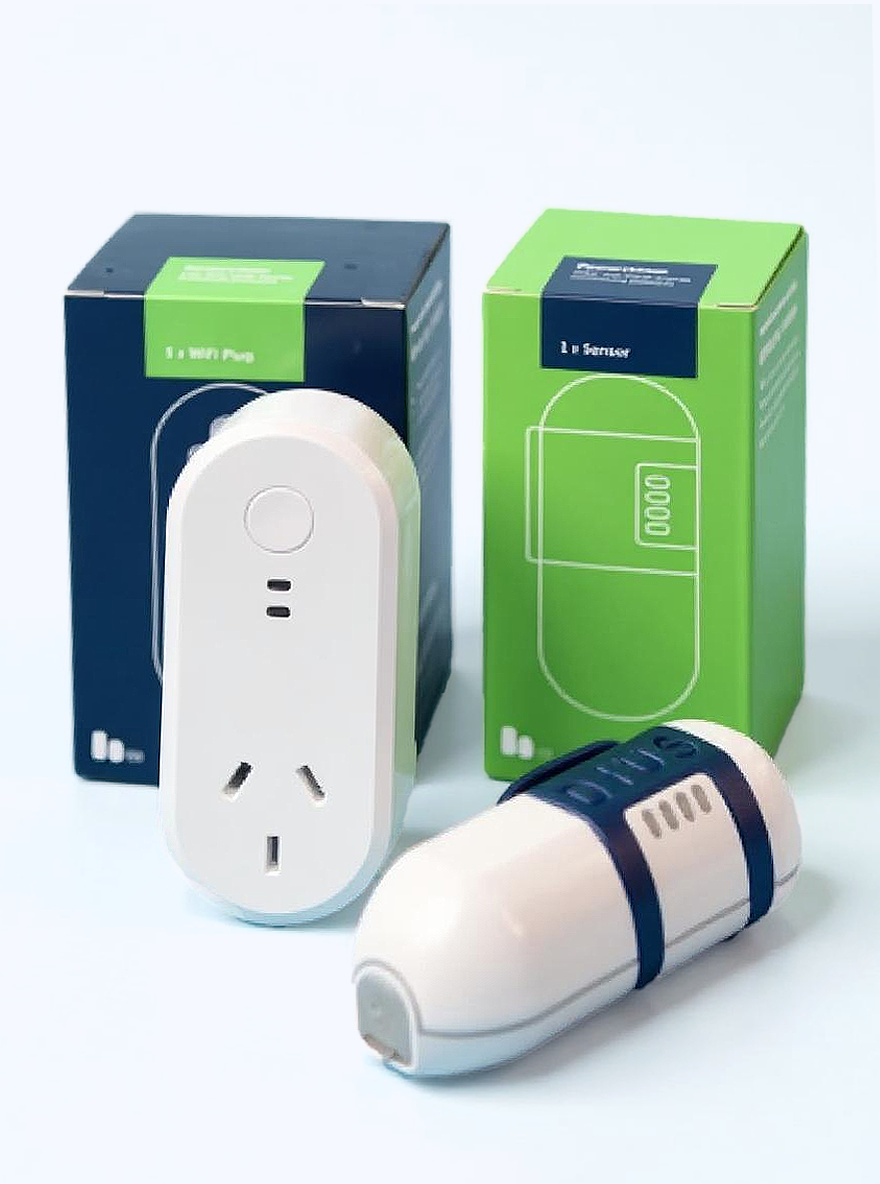
Turning signals into actionable insights. Data is transmitted via Bluetooth to the Powersensor WiFi plug, which acts as a secure gateway to our cloud. Using proprietary algorithms, we convert raw electrical signals into high-resolution power (Watts) and energy (kWh) data, updated every 30 seconds for true live visibility.

Control

Powersensor enables both automated and manual control of devices and energy loads. Through integrations and configurable rules, energy retailers and partners can manage demand, schedule usage, and respond to changing conditions in real time. This creates opportunities for demand response programs and more dynamic energy management, while homeowners can benefit from automated control that reduces effort and improves efficiency. See how you can use Powersensor with Home Assistant to control and automate your home appliances here.

Optimisation

With data, intelligence, and control working together, the Powersensor platform continuously optimises energy usage.The platform enables better alignment between consumption, generation, and pricing signals, helping to reduce costs, improve performance, and support more efficient energy flows across the network. For homeowners, this means lower energy bills and smarter use of solar and appliances. For energy retailers and partners, it enables more efficient, responsive, and scalable energy management.

FAQ

Does installation require a licensed electrician or any circuit interruptions?
Chevron arrow down
No. It is a DIY-class install that uses a patented non-contact sensor. It straps to the outside of the AC conduit or sits near the main fuse. The sensor detects the magnetic field from the current flow and the optical reader captures pulses from the utility meter to maintain utility-grade sync.
How does Powersensor handle 3-phase sites or multiple solar inverters?
Chevron arrow down
Powersensor supports single, two, and three-phase solutions. For 3-phase, the "Home Sensor" uses an optical reader to track total consumption from the meter, while the "Solar Sensor" monitors the inverter output. Note that sites with multiple inverters or complex battery setups may require specific sensor placement or may have compatibility limitations (important for professional site auditing).

What is the accuracy of the data compared to the billing meter?
Chevron arrow down
Within 5% of the utility meter. The system uses a 48-hour "Learning Process" (Fast Learning Mode). It requires a "reference point" (the WiFi plug) to calibrate the sensors against known loads. This removes the need for manual calibration or expensive CT clamps.
What are the connectivity requirements and range between components?
Chevron arrow down
The system uses a hybrid of Bluetooth (BLE) and WiFi. The sensors communicate via BLE to the WiFi Plug (Gateway), which then pushes data to the cloud. Recommended range is within 1–2 rooms (approx. 10m) of the plug. This is a critical FAQ for installers to ensure they place the WiFi plug in the optimal location during setup.
Can we monitor individual heavy-load appliances (A/C, Pumps, EV)?
Chevron arrow down
Yes, using the "Hardwired Appliance" sensor or additional WiFi plugs. The sensors can be "trained" to recognize the signature of specific hardwired appliances by monitoring the AC supply cable/conduit. This allows the energy solution provider to offer a "deep dive" into a client's energy waste.
Where is the data stored and how is it used?
Chevron arrow down
Powersensor uses a secure, Australian-based cloud infrastructure. Data is sampled at 30-second intervals, providing high-resolution "spiky" data that helps in identifying appliance starts/stops, which is more granular than many utility smart meters.
How do I set up the system?
Chevron arrow down
Download the Powersensor app, create your account, and follow the guided setup. You’ll plug in the WiFi Plug, place the sensors, and connect everything through the app.
What is the WiFi Plug used for?
Chevron arrow down
The WiFi Plug measures the energy usage of a connected appliance to help calibrate the system. This allows the platform to deliver accurate, whole-of-home energy insights.
Where do I place the sensors?
Chevron arrow down
Sensors are placed near your main electrical supply and, if applicable, your solar inverter. LED indicators help guide correct positioning. No tools or wiring are required.
How do I know it’s working?
Chevron arrow down
You can check the sensor’s LED signal and view live data in the app to confirm everything is set up correctly.
Can I monitor specific appliances?
Chevron arrow down
Yes. You can add additional WiFi Plugs or sensors to monitor appliances like EV chargers, hot water systems, air conditioning, and pool pumps.
What if I need help during installation?
Chevron arrow down
You can access installation videos and Help Centre guides via the app at any time for step-by-step support and troubleshooting.
Where can I see the full installation process?
Chevron arrow down
You can watch the full installation video or follow the detailed step-by-step guide in the app.
Do you have any questions about how Powersensor can unlock behind the meter insights?
Get in touch

Real Time, Granular Visibility into Behind-the-Meter

Reduce deployment costs by 90%, accelerate electrification services to make smarter grid management & client decisions